Most proposal teams I meet share the same first sentence: “We are always racing the clock and losing too often.”
I have walked into war rooms littered with pizza boxes, wall-to-wall redline edits, and exhausted staff who think the only fix is adding people or skipping sleep. Fifteen years of helping those teams has proven the opposite. When you apply a few Agile and Lean habits with discipline, win rates climb, output doubles, and morale rebounds. The magic is not hype or certification – it is flow.
I use a similar method with the proposal teams that I support. Some of the early steps include:
1. Start where they are, not where the textbook begins
I never arrive with a readymade Scrum playbook. Instead, we map the client’s current steps, keep anything that is currently working, and trim the rest. The first change is usually a 15‑minute daily huddle built around three prompts:
- Did you finish yesterday’s commitment?
- What will you finish today?
- What is in your way?
Teams that hate meetings accept this ritual because it is short, with cameras on, and ends on time. Blockers, meaning obstacles, surface the same day instead of the day before delivery.
2. Visualize the work so everyone sees progress
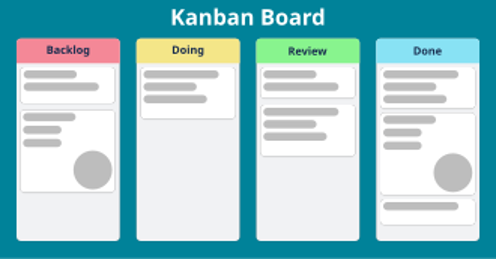
A simple Kanban board, physical or digital, makes hidden delay visible. We break work into one‑day cards (five pages of writing, a figure, and a price table are examples of a one-day Kanban card). Nothing moves forward until the reviewer in that lane says it meets the Definition of Done. Limits on work-in-progress keep people from starting a shiny new task before finishing the hard one that matters.
3. Grade to the score sheet, not to the novelist in your head
Evaluators award points. They rarely read every word. We translate each RFP factor into score points, then allocate pages and subject matter expert (SME) hours in proportion to those points. Content that cannot earn at least one point is killed early. Reviewers, frequently embedded with the team and usually reviewing every day, provide continual feedback.
4. Lean out the eight proposal wastes
Waiting, overprocessing, and late rework steal more schedule than writing. One government contracting client found that 38 percent of its 20-day bid window was spent waiting for pink team feedback. After we installed one-day cards with a continuous review cycle, the wait time dropped to 8 percent. The same six people produced two proposals in the time they once spent on one. Wins followed.
5. Results that stick
The impact is measurable. Here’s how key performance metrics improved across 30+ high-value proposals after teams adopted Agile/Lean methods. This works equally well for high-volume task order shops.
| Metric | Before | After 2‑3 cycles |
| Win rate | 18‑22% | 35‑45% |
| Bids per quarter | 3‑4 | 6‑8 |
| Average overtime hours | 20+ per person | <8 |
| Staff count | No change | Often down one |
Improvements show up within the first project, and eventually teams hit their full stride by the third project.
6. Quick answers to the questions I hear most
“We only have three people. Does this still work?” Yes. Keep one board, cap work in process (WIP) at one card per person at a time, and combine roles. The daily huddle becomes a five minute check-in.
“What about the final polish?” Continuous review means the volume is never out of sync. A light integration pass replaces the old marathon red/gold team.
“How do I juggle multiple bids?” Maintain one master board with swim lanes per proposal or clone the board template for each. Limit total WIP across bids or you will drown.
“Do I need fancy software?” No. A shared spreadsheet or whiteboard plus video chat is enough to prove the concept. Tools can scale later. I’ve found the simpler the tool the more effective it works.
“Will compliance matrices disappear?” No, I believe in keeping a live compliance matrix that is always current.
7. Pilot your first change tomorrow
- Choose one live section due this week.
- Break it into 1-day cards.
- Hold a 15-minute stand‑up every morning until it is done.
- Track cycle time versus the last section you finished.
- Share the data. Success sells the next step better than any slide deck.
8. Call to action
This is one of my favorite topics to discuss. If you are ready to replace chaos with flow, let’s talk. Red Team Consulting has guided hundreds of proposal shops through improved proposal processes, from startups to Fortune 100 integrators. I am happy to compare notes, experiences, or run a pilot with your next must-win pursuit.
Neal Levene
General Manager, Training | Red Team Consulting
neal.levene@redteamconsulting.com
Proposals can often be hard. They do not have to be miserable.